
- What Agentic AI Actually Means
- Why Small Businesses Should Care in 2026
- What Agentic AI Needs to Work Well
- The Readiness Gap Most Small Businesses Don't Know They Have
- Signs Your Business Might Be Ready
- Signs You Need to Build the Foundation First
- A Practical Way to Think About It
- FAQs
Agentic AI sounds like something from a tech company's annual report. Not exactly the kind of term that comes up when you're managing a small team, chasing invoices, or trying to keep customers happy. But that's changing, and faster than most people expected. In 2026, agentic AI is moving from experimental to genuinely practical — and small businesses are starting to ask the right question: should we actually be paying attention to this?
The short answer is yes. The longer answer is: it depends on where your business stands right now.
Here's what agentic AI actually means, how it differs from the tools you might already be using, and how to honestly assess whether your business is positioned to benefit from it.
What Agentic AI Actually Means
Most AI tools you've come across so far are reactive. You ask a question, you get an answer. You paste in a document, it summarises. You type a prompt, something gets generated. Useful, but passive. They wait for you to start every interaction.
Agentic AI works differently. An AI agent doesn't just respond to a single input — it pursues a goal across multiple steps, makes decisions along the way, draws on tools and data sources, and adjusts based on what it finds. It behaves less like a calculator and more like an employee working through a task.
Here's a concrete example. A reactive AI tool helps you draft a follow-up email when you ask it to. An agentic AI system could monitor your CRM, identify leads that haven't been contacted in 14 days, draft personalised follow-ups for each one, schedule them for optimal send times, and flag any replies that need your attention — all without you initiating each step.
That's a meaningful difference. And it's why agentic AI is attracting serious interest from businesses of every size.
Why Small Businesses Should Care in 2026
Small businesses have always faced the same core constraint: not enough time, not enough staff, and too many things that need doing. AI agents address that directly by handling multi-step work autonomously.
The use cases gaining traction for smaller operations right now include:
- Customer support workflows where an agent handles tier-one queries, escalates when needed, and logs everything without manual input
- Sales pipeline management where agents track activity, send follow-ups, and surface opportunities based on behaviour signals
- Operations and scheduling where agents coordinate between tools, book resources, and send reminders across systems
- Financial monitoring where agents flag anomalies, reconcile categories, and prepare summaries for review
None of these require a dedicated IT team. Several platforms in 2026 offer no-code or low-code agent builders that small business owners can configure themselves. The barrier to entry is lower than it's ever been.
But lower barriers don't mean no barriers. Agentic AI still requires something from your business before it can deliver real value.
What Agentic AI Needs to Work Well
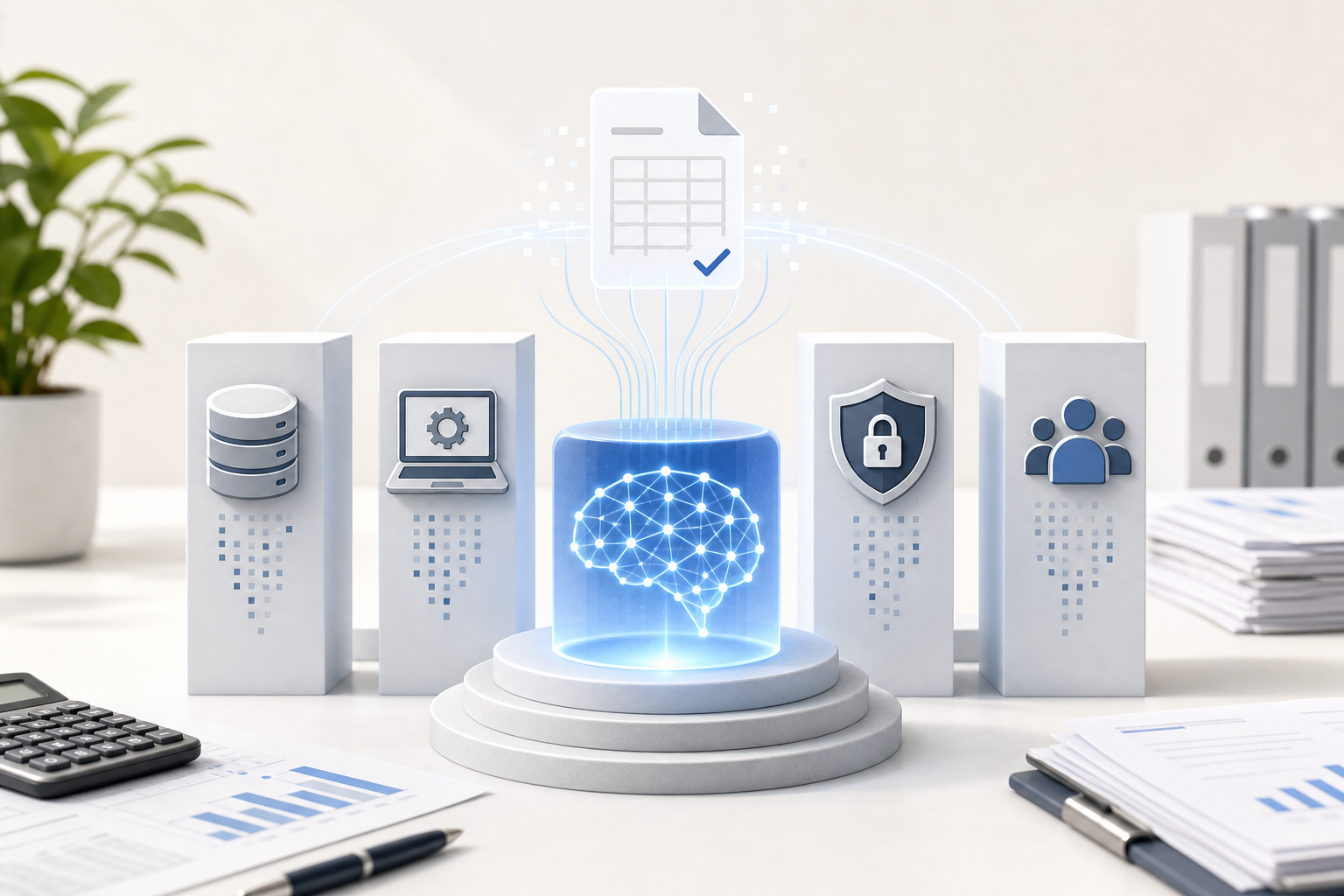
This is where a lot of small businesses run into trouble. Agentic AI isn't plug-and-play in the way a simple chatbot might be. For an agent to act reliably on your behalf, a few things need to be in place first.
Clean, Accessible Data
An AI agent is only as good as the data it can reach. If your customer records are scattered across spreadsheets, email threads, and three different apps, an agent can't build a coherent picture of what's happening. Data quality and structure matter — a lot.
Defined Processes
Agents work best when they're executing a process that actually exists. If your sales follow-up routine is informal and varies by person, an agent will either replicate that inconsistency or fail to function at all. Before you automate something, it needs to be defined.
Integration-Ready Systems
Agentic AI typically needs to connect to your existing tools — your CRM, email platform, calendar, project management software. If those systems don't support integrations, or if they're outdated, agents will struggle to operate across them.
Governance and Oversight
Giving an AI agent the ability to act on your behalf carries real risk if you haven't thought through guardrails. What can it do without approval? What should always require a human decision? Businesses that skip this step often end up with agents making mistakes that are difficult to reverse.
The Readiness Gap Most Small Businesses Don’t Know They Have
Here's the honest reality: most small businesses are enthusiastic about AI but underestimate how much foundational work is needed before agentic AI can actually deliver results.
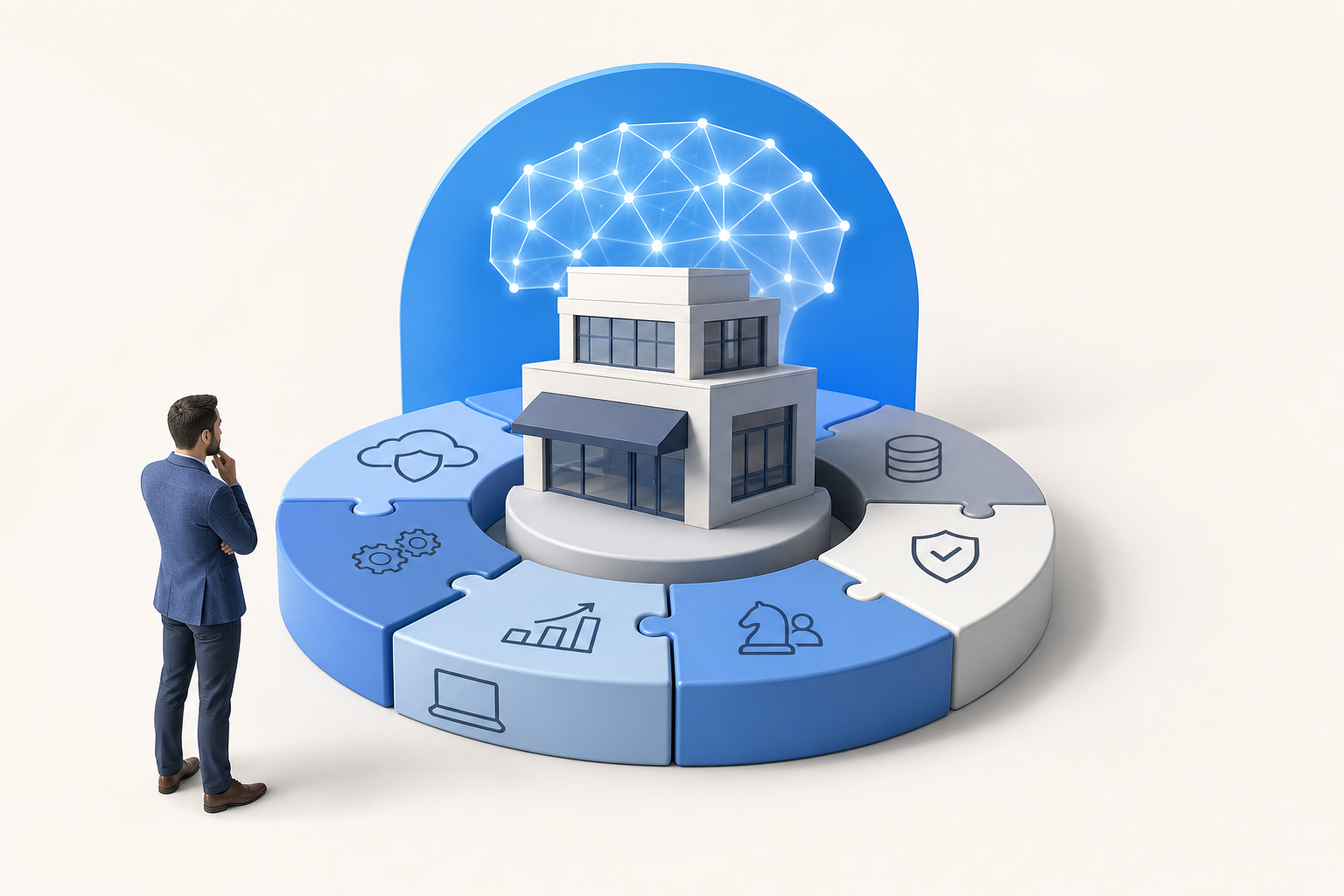
It's not primarily about budget. It's about readiness across multiple dimensions — data infrastructure, team capability, process maturity, governance, and technology integration. A business that scores well on one dimension but poorly on others will still struggle.
This is exactly why structured assessment matters before you start spending on AI tools. Rushing into agentic AI without understanding your gaps is expensive. You end up paying for tools that don't work, or worse, tools that work but produce unreliable outputs because the foundation wasn't there.
If you want a clear picture of where your business actually stands, AI Ready Score was built for this. You answer 53 to 61 questions across eight business dimensions and immediately receive a personalised report that includes your AI readiness score, a risk profile, an estimated investment range, and a 90-day improvement roadmap. It's designed specifically for small and medium businesses that need structured clarity — without paying for expensive consultants.
Signs Your Business Might Be Ready
Not every small business is starting from scratch. Some are closer to agentic AI readiness than they realise. These are good indicators you're in a stronger position:
- Your core data lives in one or two well-maintained systems rather than scattered across tools
- Your team has already adopted at least one AI tool and uses it consistently
- You have documented processes for key workflows, not just informal habits
- Your software stack uses modern platforms that support integrations
- You've thought about data privacy and have basic policies in place
If several of these describe your business, agentic AI is a realistic near-term opportunity. You're not starting from zero.
Signs You Need to Build the Foundation First
On the other side, some signals suggest you'd be better served investing in readiness before moving to agentic AI:
- Customer and operational data is fragmented or inconsistently maintained
- Your team hasn't adopted simpler AI tools yet, or adoption has been patchy
- Key processes live in people's heads rather than documented systems
- Your software is older, siloed, or doesn't connect easily to other tools
- No one in the business has clear ownership of AI or technology decisions
This doesn't mean agentic AI is off the table. It means the path to it runs through some foundational improvements first. That's not a failure — it's just sequencing.
A Practical Way to Think About It
AI readiness is a spectrum, not a binary. At one end, businesses that are genuinely unprepared. At the other, businesses with the data, systems, and culture to deploy agentic AI and see real results. Most small businesses sit somewhere in the middle.
The goal isn't to reach the far end overnight. It's to know where you are, understand the gaps, and take the next right step. For some businesses, that means deploying an agent for customer support this quarter. For others, it means cleaning up the CRM and documenting three core workflows before touching anything else.
Both paths are valid. What isn't valid is guessing.
FAQs
What is agentic AI in simple terms?
Agentic AI refers to AI systems that can pursue goals across multiple steps without needing a human to prompt each action. Unlike standard AI tools that respond to individual inputs, agents plan, decide, and act autonomously within defined boundaries.
Is agentic AI practical for small businesses right now?
In 2026, yes. Several platforms offer agent-building tools accessible to small businesses without technical teams. Practicality depends less on the technology itself and more on whether the business has the data, processes, and systems for agents to work with.
What's the difference between agentic AI and regular AI tools like ChatGPT?
Standard AI tools are reactive — you give them an input and they produce an output. Agentic AI systems can take a goal, break it into steps, use multiple tools, make decisions along the way, and complete tasks over time without continuous human input.
What are the biggest risks of agentic AI for small businesses?
The main risks are acting on poor data, automating broken processes, and insufficient oversight. An agent with permission to send emails or update records can cause real problems if it's operating on incorrect information or without clear guardrails.
How do I know if my small business is ready for agentic AI?
Readiness depends on multiple factors: data quality, process maturity, team capability, system integration, and governance. A structured assessment across these dimensions gives you a clearer picture than gut feel. AI Ready Score is built to provide exactly that kind of evaluation for small and medium businesses.
Do I need a technical team to implement agentic AI?
Not necessarily. Many 2026 agent platforms are designed for non-technical users. That said, you do need someone who understands your business processes well enough to configure the agent correctly and monitor its outputs.
How long does it take to get value from agentic AI?
It varies. A business with clean data and documented processes might deploy a useful agent within weeks. A business that needs to build that foundation first could be looking at three to six months before agents are producing reliable results.
Agentic AI isn't hype. It's a practical capability that small businesses can genuinely use in 2026. But the businesses that get real results from it are the ones that go in with clear eyes about where they stand. Know your readiness, address your gaps, then move forward with confidence. That sequence matters more than the technology itself.


0 Comments