- What Is an AI Maturity Assessment?
- What Is an AI Readiness Assessment?
- The Core Difference, Simply Put
- Why This Distinction Matters for SMBs
- What a Good AI Readiness Assessment Delivers
- When You Might Need Both
- A Note on Governance
- Take the Free Assessment
- FAQs
These two terms get used interchangeably. They shouldn't be. If you're trying to figure out where your business stands on AI, reaching for the wrong framework will give you the wrong answer — and point you in the wrong direction.
Here's what each one actually measures, why the difference matters, and which one your business probably needs right now.
What Is an AI Maturity Assessment?
An AI maturity assessment measures how far along your business already is in deploying and scaling AI. It assumes you've started. The questions focus on what AI systems you have running, how embedded they are in your operations, how your teams use them day to day, and whether your governance structures can support continued growth.
Think of it as a progress report. It's most useful for organisations that have already made meaningful AI investments and want to evaluate whether those investments are working, identify gaps in adoption, or benchmark themselves against peers.
Maturity models typically use staged frameworks — often five levels ranging from "initial" or "ad hoc" through to "optimised" or "leading." The output tells you which stage you're at and what it would take to reach the next one.
Who Uses AI Maturity Assessments?
Maturity assessments are built for enterprises. Large organisations with dedicated data science teams, existing AI infrastructure, and multi-year AI programmes use them to audit progress and plan the next phase.
If your business has 10 to 150 employees and is still working out whether and how to adopt AI, a maturity model isn't the right starting point. You don't have enough AI activity to measure maturity against.
What Is an AI Readiness Assessment?
An AI readiness assessment measures your business's capacity to adopt AI successfully. It looks at what you have in place right now — across dimensions like data quality, digital infrastructure, governance, strategy, and team culture — and tells you how prepared you are to implement AI effectively.
It's a diagnostic, not a progress report. The output isn't a stage on a ladder. It's a scored picture of your current state across multiple dimensions, with specific gaps identified and a clear path forward.
Readiness assessments are built for businesses that are pre-implementation or early in their AI journey. They answer the question: Are we ready to do this well, and if not, what needs to change first?
What a Readiness Assessment Actually Covers
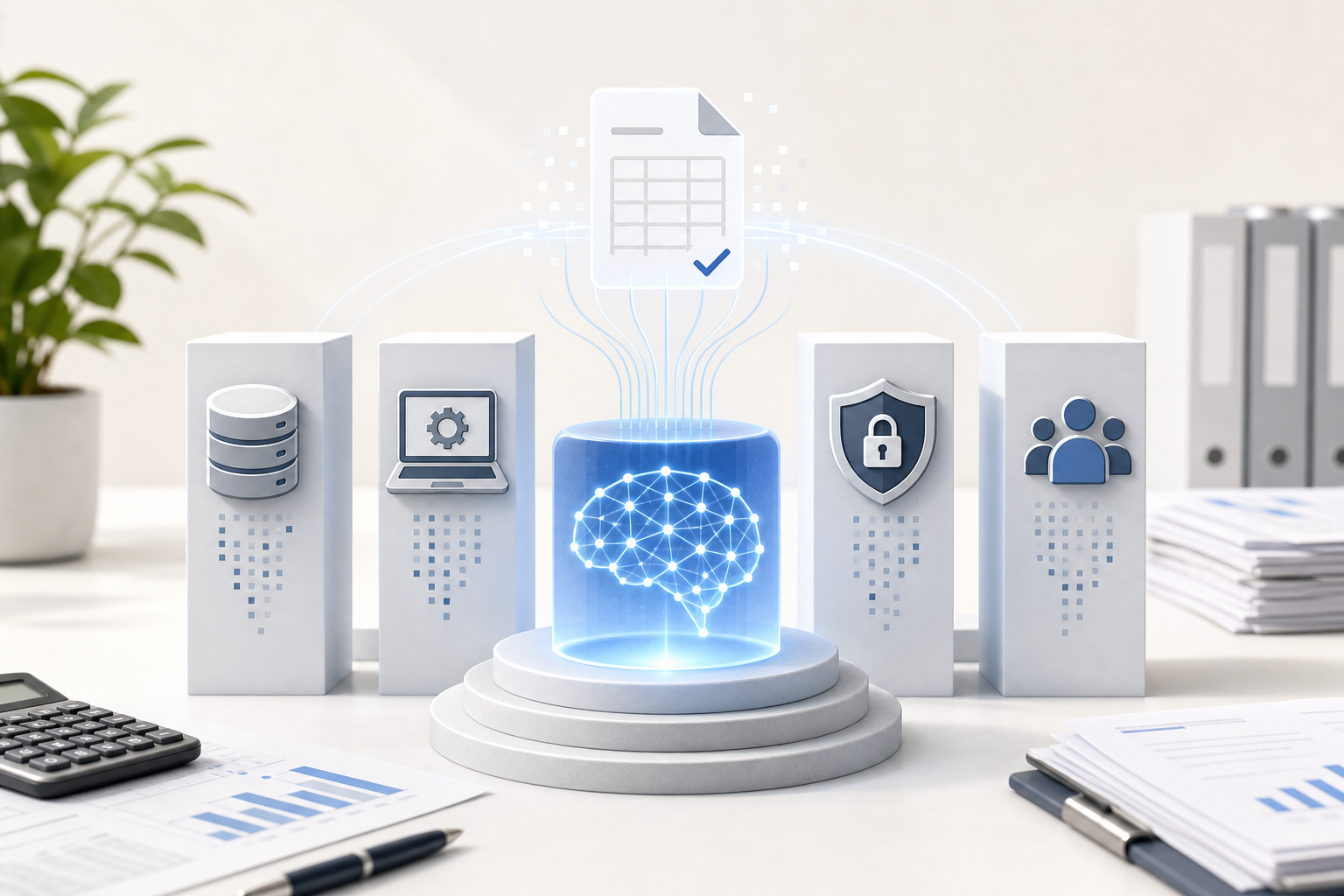
A thorough AI readiness assessment doesn't just ask whether you use AI tools. It examines:
- Digital foundation — the quality and accessibility of your existing technology stack
- Data infrastructure — whether your data is clean, structured, and usable
- Governance — whether you have policies, accountability, and compliance frameworks in place
- Strategy — whether AI is connected to actual business goals
- Team culture — whether your people are ready to adopt and work alongside AI
Each dimension matters on its own terms. A business can have excellent data infrastructure and weak governance, or a strong strategy sitting on poor digital foundations. A readiness assessment surfaces that uneven picture so you know exactly where to focus.
The Core Difference, Simply Put
| AI Maturity Assessment | AI Readiness Assessment | |
|---|---|---|
| Primary question | How advanced is our AI programme? | Are we ready to adopt AI successfully? |
| Assumes | AI is already deployed | AI adoption is being planned or is early-stage |
| Output | Maturity stage or level | Readiness score across multiple dimensions |
| Best for | Enterprises with existing AI programmes | SMBs evaluating or beginning AI adoption |
| Focus | Progress and optimisation | Gaps and preparation |
The simplest way to think about it: maturity tells you how far you've come. Readiness tells you whether you're prepared to go.
Why This Distinction Matters for SMBs
Only 11.9 percent of SMEs actively use AI, compared to 40 percent of large enterprises. That gap exists partly because small and medium businesses reach for enterprise frameworks that don't fit their situation.
If you're running a business with 20 to 100 employees and haven't yet deployed AI in any systematic way, a maturity model will score you against the absence of AI activity — not your actual capacity to adopt it. That's discouraging, and it's not useful.
What you actually need to know is: given your current data, systems, team, and governance, how ready are you to implement AI well? And where gaps exist, which ones matter most and what will it cost to close them?
That's a readiness question, not a maturity question.
What a Good AI Readiness Assessment Delivers
The depth of the assessment determines how useful the output is. A 10-question checklist gives you rough orientation at best. A thorough assessment covering 53 to 61 questions across 8 business dimensions gives you something you can actually act on.
AI Ready Score is built specifically for this. It's a free, web-based assessment that takes 10 to 15 minutes to complete and immediately emails you a personalised AI-generated report — not a generic template, but a report built from your specific answers.
That report includes four concrete outputs:
- An AI readiness score across all 8 dimensions
- An estimated investment range to close your readiness gaps over 12 to 24 months
- A three-part risk profile covering AI-Absence Risk, Implementation Risk, and Governance Risk
- A 90-day improvement roadmap prioritised by your weakest dimension
The governance and risk scoring is tied to real regulatory frameworks, including the EU AI Act — which matters if your business operates in or sells into European markets.
For businesses ready to move from assessment to execution, development teams working on AI implementation can find structured support for translating readiness findings into working systems at vibier.io.
When You Might Need Both
There's a logical sequence here for most SMBs.
Start with a readiness assessment. Understand your gaps, close the most important ones, and build a foundation that gives AI a real chance of working. Once you have tools and processes running, a maturity assessment becomes genuinely useful — helping you evaluate whether those investments are delivering, where adoption is lagging, and how to scale what's working.
Skipping the readiness phase and jumping straight to a maturity framework is a common mistake. It leads businesses to benchmark against enterprise standards they're not yet equipped to meet, which produces confusion rather than clarity.
A Note on Governance
One area where readiness and maturity assessments increasingly overlap is governance. The EU AI Act introduced compliance obligations that apply regardless of how mature or immature your AI programme is. If you're deploying AI in ways that affect employees, customers, or decision-making, those requirements apply now.
A readiness assessment that includes governance scoring — as AI Ready Score does — gives you a baseline on your compliance posture before you've committed to any specific implementation. That's far more useful than discovering governance gaps after the fact.
Take the Free Assessment
Most businesses know AI matters. Few know where they actually stand. If you haven't done a structured readiness assessment yet, that's the right place to start.
Take the free AI readiness assessment at AI Ready Score. It takes 10 to 15 minutes. You'll get a scored report across 8 dimensions, a risk profile, an investment estimate, and a 90-day roadmap — delivered to your inbox immediately.
Free. No consultant required. No app to install.
FAQs
What is the main difference between an AI maturity assessment and an AI readiness assessment?
An AI maturity assessment measures how advanced your existing AI programme is. An AI readiness assessment measures whether your business is prepared to adopt AI successfully. Maturity assumes AI is already deployed. Readiness evaluates your capacity to implement it well.
Which type of assessment is better for a small business?
For most small and medium businesses that are pre-implementation or early in their AI journey, a readiness assessment is the right starting point. Maturity models are designed for organisations that already have AI programmes running and want to benchmark or optimise them.
What dimensions does an AI readiness assessment cover?
A thorough assessment covers multiple dimensions including digital foundation, data infrastructure, governance, strategy, and team culture. AI Ready Score assesses 8 dimensions across 53 to 61 questions.
Can an AI readiness assessment help with EU AI Act compliance?
Yes, if the assessment includes governance scoring tied to regulatory frameworks. AI Ready Score includes a governance and risk dimension scored against the EU AI Act, giving you a baseline on compliance posture before implementation.
How long does an AI readiness assessment take?
A well-designed self-serve assessment takes 10 to 15 minutes to complete. AI Ready Score delivers a personalised report to your inbox immediately after you finish.
Do I need to hire a consultant to do an AI readiness assessment?
No. Self-serve tools like AI Ready Score deliver a scored, personalised report without a sales call or consultant engagement. Human-led alternatives exist but typically cost $5,000 to $15,000 or more.
When should a business do an AI maturity assessment?
Once you have AI tools or processes running and want to evaluate how well they're working, where adoption is lagging, or how to scale effectively. It's a second step, not a starting point.

0 Comments