- What "Artificial Intelligence Readiness" Actually Means
- Why SME Owners Are Asking This Question Now
- The Eight Dimensions of AI Readiness
- How to Assess Your Own Readiness
- The Three Risks Most SMEs Overlook
- What a 90-Day Readiness Improvement Plan Looks Like
- Common Mistakes SME Owners Make Before Assessing Readiness
- A Note on Adviser-Led Assessments
- Frequently Asked Questions
- Where to Start
Artificial intelligence readiness isn't about having the latest software or the biggest IT budget. For most small and medium business owners, it comes down to one practical question: does your business have the foundation to adopt AI without wasting money or creating new problems? This article breaks down what AI readiness actually means, how to assess it across the dimensions that matter most, and what you can do in the next 90 days to start closing the gaps.
What “Artificial Intelligence Readiness” Actually Means
Readiness isn't a binary state. You're not either "ready for AI" or "not ready." It's a spectrum, and most SMEs sit somewhere in the middle without knowing exactly where.
At its core, artificial intelligence readiness describes how well your business is positioned to adopt, operate, and benefit from AI tools — without significant disruption, compliance risk, or wasted investment. That means looking at your data, your processes, your people, and your governance posture together. Signing up for a ChatGPT account doesn't count.
The distinction matters because many business owners confuse AI readiness with AI adoption. Adoption is the act of using a tool. Readiness is the condition that determines whether that adoption succeeds or fails. A business that jumps to adoption without readiness typically ends up with fragmented tools, staff who resist or misuse them, and no clear way to measure whether any of it was worth the cost.
Why SME Owners Are Asking This Question Now
The conversation around AI in small business has shifted noticeably in 2026. A year ago, most SME owners were experimenting informally. Now the pressure is more structured. Competitors are visibly automating workflows. Boards and investors are asking about AI strategy. Accountants and advisers are raising it in quarterly reviews.
If you've been in a meeting where someone asked "what's your AI strategy?" and you didn't have a clear answer, you're not alone. That moment is one of the most common triggers for SME owners to start taking readiness seriously.
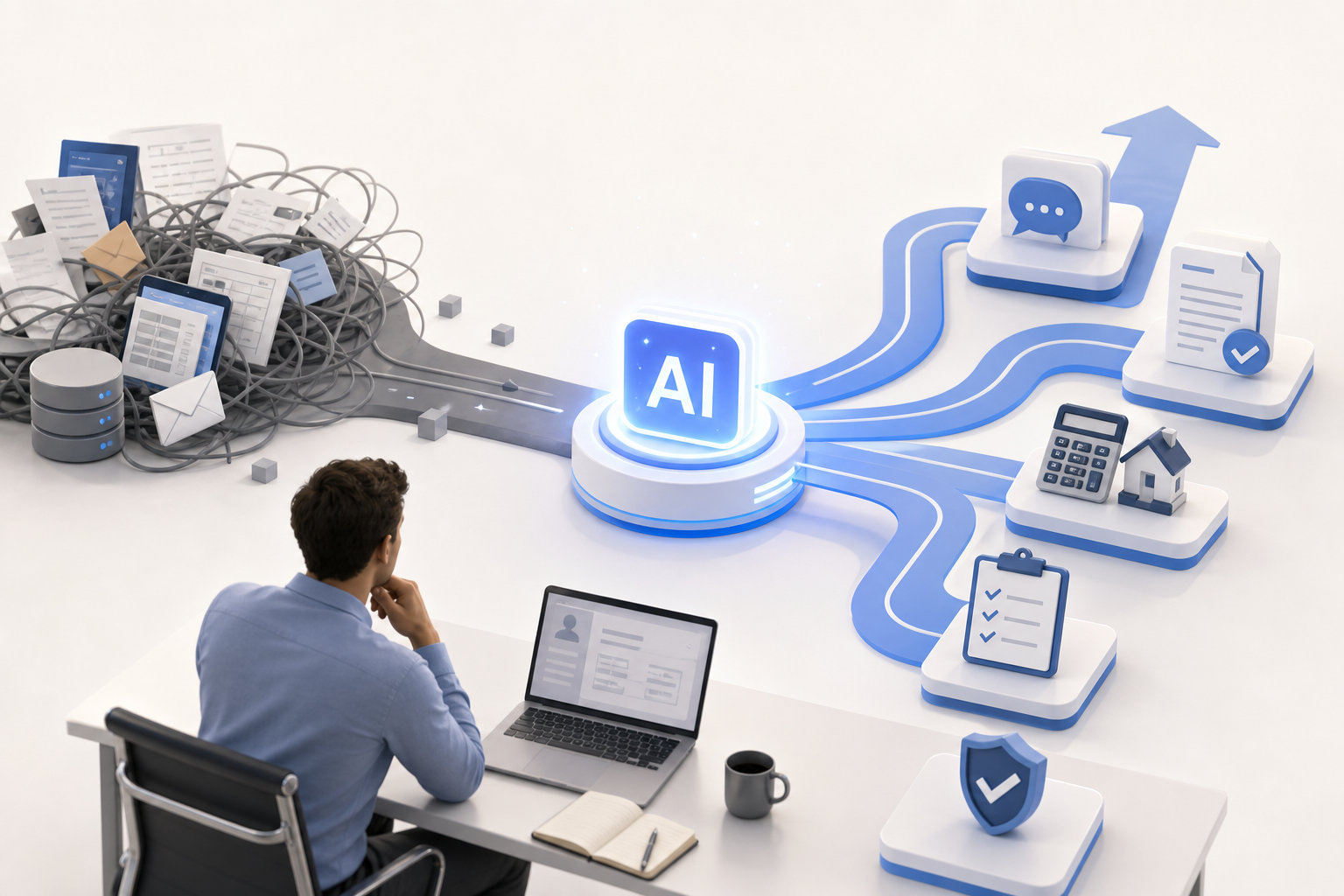
The problem is that most available resources are either too shallow or too expensive. A 10-question quiz tells you almost nothing actionable. A consulting engagement costing $5,000 to $15,000 is hard to justify before you even know what you need. Most owners end up stuck between those two extremes — which is exactly why a structured, self-serve framework is worth understanding.
The Eight Dimensions of AI Readiness
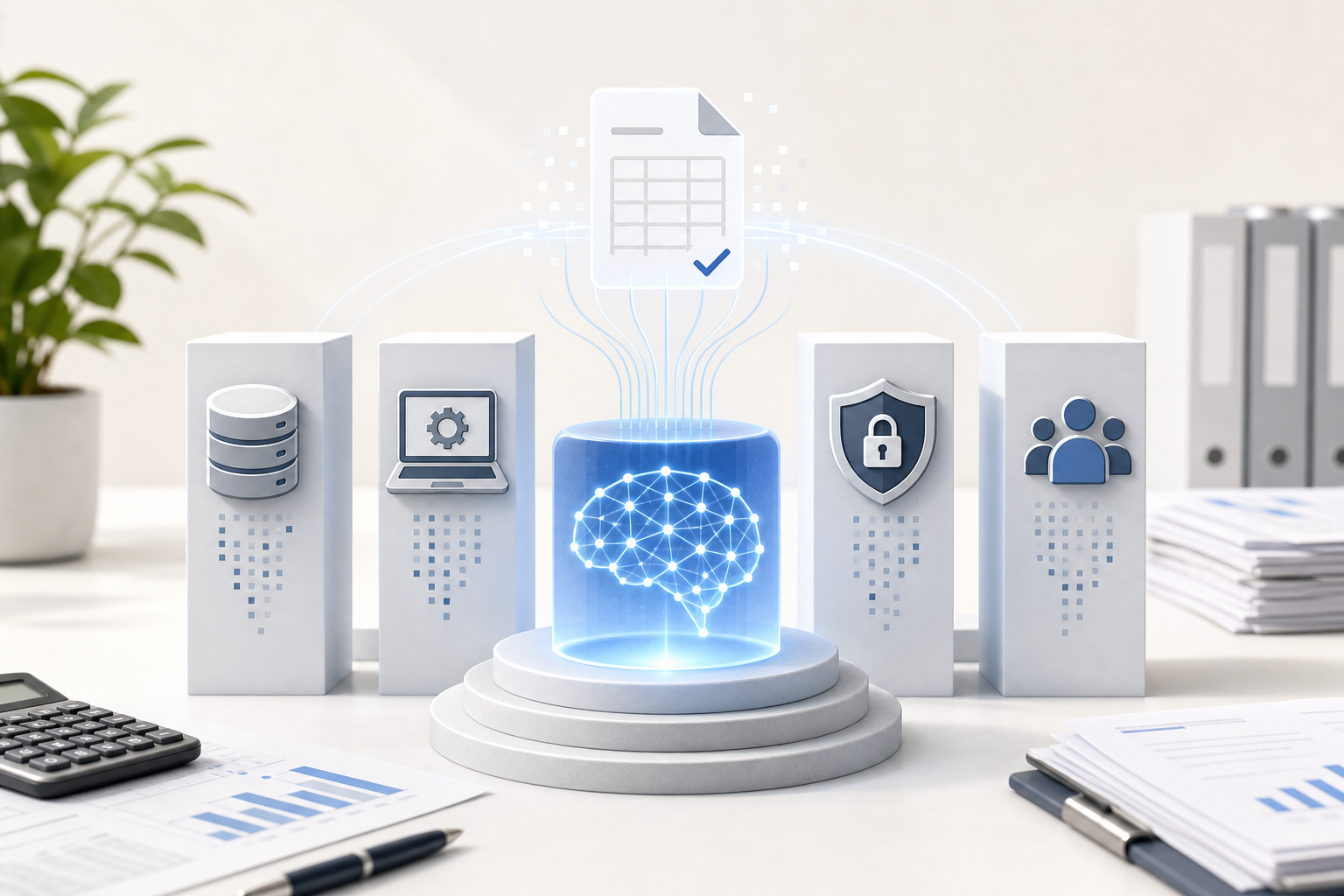
A meaningful AI readiness assessment doesn't focus on a single area. It looks across the whole business. While different frameworks use different labels, a thorough assessment for an SME should cover at least the following dimensions.
Digital Foundation
This is your baseline technology infrastructure — the software your business runs on, how well those systems are integrated, and whether your digital tools are current enough to connect with AI capabilities. A business running disconnected legacy systems or paper-based processes has a weak digital foundation, and that creates a hard ceiling on what AI can realistically do.
Ask yourself: Are your core business systems cloud-based? Do your tools share data, or does information live in silos? How much of your daily workflow is already digital versus manual?
Data Infrastructure
AI depends on data. Not just having data, but having data that's organised, accessible, and reasonably clean. Many SMEs have more data than they realise — it's just scattered across spreadsheets, email threads, accounting software, and CRM systems that don't talk to each other.
Your data infrastructure score reflects how well-positioned you are to feed AI tools with reliable inputs. Poor data infrastructure is one of the most common reasons AI pilots fail in small businesses.
Governance
This dimension covers how your business manages AI-related risk — data privacy, decision accountability, and regulatory compliance. In 2026, this is no longer a theoretical concern. The EU AI Act is in active enforcement, and its implications extend beyond European businesses to any SME that processes data belonging to EU residents or operates in global markets.
Governance readiness means having clear policies for how AI tools are selected, how they handle sensitive data, and who is accountable when an AI-assisted decision causes a problem. Most SMEs haven't thought through these questions at all, which creates real exposure.
Strategy
Do you have a defined view of where AI fits in your business over the next one to three years? Strategy readiness isn't about having a 40-page document. It's about whether your leadership team has agreed on which problems AI should solve, what success looks like, and how AI investment connects to business goals.
Without that clarity, AI adoption tends to be reactive and fragmented — a collection of tools that each solve a narrow problem but don't add up to a coherent capability.
Team Culture
Technology adoption fails when people don't trust it, understand it, or see a reason to use it. Team culture readiness covers your staff's awareness of AI, their openness to change, and whether your business has the internal capacity to learn and adapt as tools evolve.
This dimension also includes leadership behaviour. If the owner or CEO isn't visibly engaged with AI adoption, it's very hard to build momentum across the team.
Additional Dimensions
A comprehensive assessment also examines process maturity, financial readiness for AI investment, and customer-facing considerations. Together, these dimensions give a complete picture of where your business stands — and where the most important gaps are.
How to Assess Your Own Readiness
There are a few ways to approach an AI readiness assessment, and they vary significantly in depth and usefulness.
Self-reflection checklists are a starting point. You can work through the dimensions above and score yourself honestly on each. The limitation is that self-assessment without a structured framework tends to be optimistic. Owners often rate their data infrastructure higher than it deserves because they're not sure what "good" actually looks like.
Short free tools exist, including the Microsoft AI Readiness Wizard, which covers around 10 questions. Useful for building initial awareness, but they don't produce a scored report, an investment estimate, or a risk profile. A starting point, not a diagnosis.
Structured assessments go deeper. The AI Ready Score assessment covers 53 to 61 questions across eight business dimensions. On completion, it emails a personalised AI-generated report that includes your readiness score, an estimated investment range for closing gaps over 12 to 24 months, a three-part risk profile covering AI-Absence Risk, Implementation Risk, and Governance Risk, and a 90-day improvement roadmap prioritised by your weakest dimension. It's free, takes 20 to 30 minutes, and doesn't require a consultant to complete or interpret.
Paid consulting engagements make sense for complex or regulated enterprise deployments where a human-led assessment adds genuine value. For most SMEs with 5 to 50 staff, the cost is hard to justify before you have a baseline understanding of where you stand.
The Three Risks Most SMEs Overlook
When SME owners think about AI risk, they usually focus on implementation: what if the tool doesn't work, or the rollout disrupts operations? That's a real concern, but it's only one of three risk categories worth understanding.
AI-Absence Risk
This is the risk of not adopting AI while your competitors are. It includes slower operations, higher labour costs relative to automated competitors, and the compounding disadvantage of falling behind on capability development. Most SME owners underestimate this risk because it's invisible in the short term — it shows up in margin compression and lost customers over 12 to 24 months.
Implementation Risk
The category most people think of first. It covers the risk that an AI tool is poorly chosen, poorly implemented, or poorly adopted by staff. Implementation risk is highest when businesses skip the readiness phase and go straight to purchasing tools.
Governance Risk
This covers regulatory exposure, data privacy failures, and accountability gaps in AI-assisted decisions. In 2026, governance risk is more concrete than it was two years ago. The EU AI Act has moved from policy to enforcement, and SMEs that handle personal data, make credit-related decisions, or operate in regulated industries need to understand where their exposure sits.
A structured readiness assessment should surface all three risk categories — not just the implementation dimension.
What a 90-Day Readiness Improvement Plan Looks Like
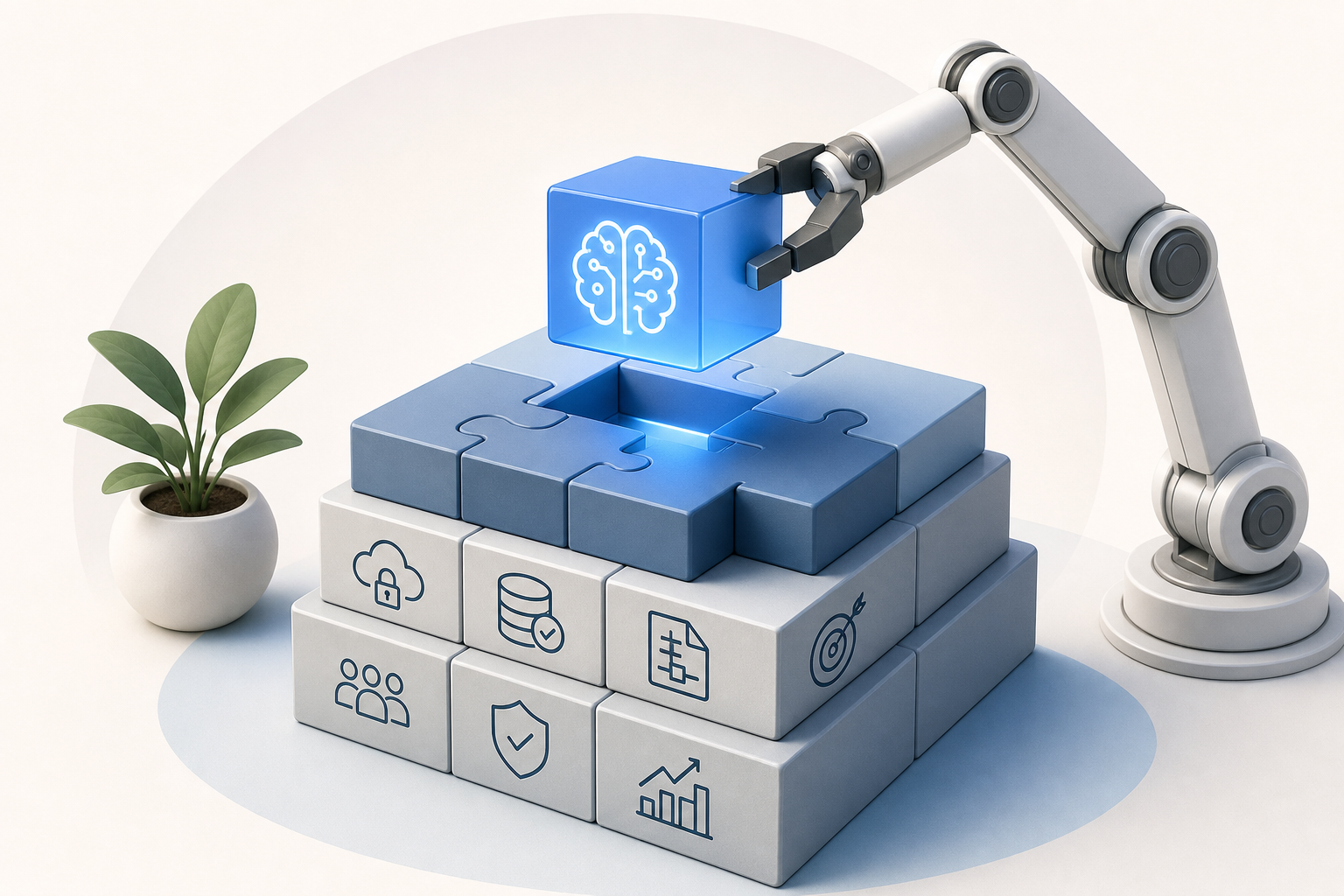
A 90-day roadmap for AI readiness isn't about deploying AI tools. It's about building the foundation that makes deployment worthwhile. The specific priorities depend on your weakest dimension, but a typical plan for an SME with moderate readiness looks something like this.
Days 1 to 30: Foundation work. Audit your data sources and identify the two or three most important datasets that are currently fragmented or inaccessible. Document your current software stack and identify integration gaps. Brief your leadership team on the AI strategy conversation and agree on two or three business problems you want AI to address.
Days 31 to 60: Governance and policy. Draft a basic AI usage policy covering which tools staff can use, how sensitive data should be handled, and who is accountable for AI-assisted decisions. Review your data privacy practices against current regulatory requirements. Identify which of your planned AI use cases might carry compliance risk.
Days 61 to 90: Pilot selection and preparation. Choose one AI use case with a clear success metric and low implementation risk. Prepare your data and processes for that pilot. Brief the relevant staff and set expectations about the evaluation period.
This is a simplified illustration. A personalised roadmap based on your actual assessment results will be prioritised differently depending on which dimensions score lowest.
Common Mistakes SME Owners Make Before Assessing Readiness
Skipping the assessment phase is the most expensive mistake. Buying AI tools before you understand your data infrastructure typically means the tools underperform — because they can't access clean, connected data.
Treating AI readiness as an IT problem is the second most common mistake. Readiness spans strategy, culture, governance, and finance. Delegating it entirely to a technical person misses the dimensions most likely to cause failure.
Waiting for certainty is a third pattern. Some owners delay because they're not sure which AI tools will be relevant to their industry in two years. That uncertainty is real, but readiness work isn't tool-specific. Building clean data, clear processes, and a capable team makes you better positioned regardless of which tools emerge.
A Note on Adviser-Led Assessments
If you work with an accountant, business coach, or IT consultant, AI readiness is increasingly part of the advisory conversation in 2026. Some advisers now offer structured assessments to their SME clients as part of a broader business review. If yours hasn't raised it yet, it's worth asking whether they have a framework for evaluating your AI position.
The AI Ready Score platform includes a white-label option for advisers who want to offer the assessment under their own brand. That means the scored report, risk profile, and roadmap can be delivered as part of an existing advisory relationship — rather than as a standalone tool the client has to find themselves.
Frequently Asked Questions
What is artificial intelligence readiness for a small business?
Artificial intelligence readiness is a measure of how well your business is positioned to adopt and benefit from AI tools. It covers your data infrastructure, technology foundation, governance practices, team culture, and strategic clarity. A business with strong readiness can adopt AI with lower risk and higher return than one that jumps straight to tool selection without that foundation.
How do I know if my business is ready for AI?
The most reliable way is a structured assessment that scores your business across multiple dimensions. Self-reflection gives you a rough sense, but a scored assessment surfaces gaps you're likely to underestimate — particularly in data quality and governance. The free assessment at aireadyscore.com covers 53 to 61 questions and delivers a personalised report immediately on completion.
What are the biggest barriers to AI readiness for SMEs?
The three most common barriers are fragmented or poor-quality data, unclear strategy around which problems AI should solve, and a staff culture that hasn't been prepared for change. Governance gaps are a growing barrier in 2026 as regulatory frameworks like the EU AI Act become more relevant to businesses outside Europe.
How long does it take to become AI-ready?
It depends on your starting point. A business with clean data, integrated systems, and an engaged leadership team might be ready to run a meaningful AI pilot within 60 to 90 days. A business with significant data or process gaps may need six to twelve months of foundation work before AI adoption produces reliable results. A readiness assessment gives you a realistic estimate for your specific situation, including an investment range for closing gaps over 12 to 24 months.
Do I need a consultant to assess my AI readiness?
Not necessarily. A structured self-serve assessment can give you a scored baseline, a risk profile, and a prioritised roadmap without any consultant involvement. Consulting engagements add value for complex or regulated deployments where human judgement and customisation are worth the cost. For most SMEs with 5 to 50 staff, a structured self-serve assessment is the right starting point.
What is the difference between AI readiness and AI adoption?
AI adoption is the act of using AI tools in your business. AI readiness is the condition that determines whether that adoption succeeds. You can adopt AI without being ready, but the results tend to be poor: tools that underperform because of data problems, staff who resist or misuse them, and no clear way to measure value. Readiness work happens before or alongside adoption — not after.
How does governance fit into AI readiness for a small business?
Governance covers how your business manages the risks associated with AI, including data privacy, decision accountability, and regulatory compliance. In 2026, this is increasingly concrete. The EU AI Act is in active enforcement, and its implications extend to SMEs that handle personal data or operate in regulated sectors. A readiness assessment that includes governance scoring helps you understand your exposure before you start deploying tools.
Where to Start
Artificial intelligence readiness is a practical, measurable condition — not a vague aspiration. The framework above gives you a way to think about the dimensions that matter. But thinking about it isn't the same as knowing where you actually stand.
The most useful next step is a structured assessment that scores your business honestly across all the relevant dimensions and tells you, specifically, what to fix first. If you want that picture without paying for a consultant, the free assessment at aireadyscore.com is built for exactly that purpose.

0 Comments