
- What an AI Readiness Score Actually Measures
- What a Good Score Looks Like
- The Dimensions That Drag Scores Down Most
- How to Move the Needle
- Using Your Score as a Business Tool, Not Just a Benchmark
- Getting Your Score
- Frequently Asked Questions
Most businesses know they should be doing something with AI. Far fewer know where they actually stand. That gap between intention and clarity is exactly where an AI readiness score earns its keep.
An AI readiness score is a structured measure of how prepared your business is to adopt, integrate, and benefit from AI. It's not a pass/fail grade — it's a diagnostic. And like any good diagnostic, the real value is in what it tells you to do next.
Here's what a strong score looks like across the dimensions that matter, what low scores typically signal, and the practical steps that move the needle for small and medium businesses.
What an AI Readiness Score Actually Measures
A score without context is just a number. To interpret yours correctly, you need to understand what's being measured.
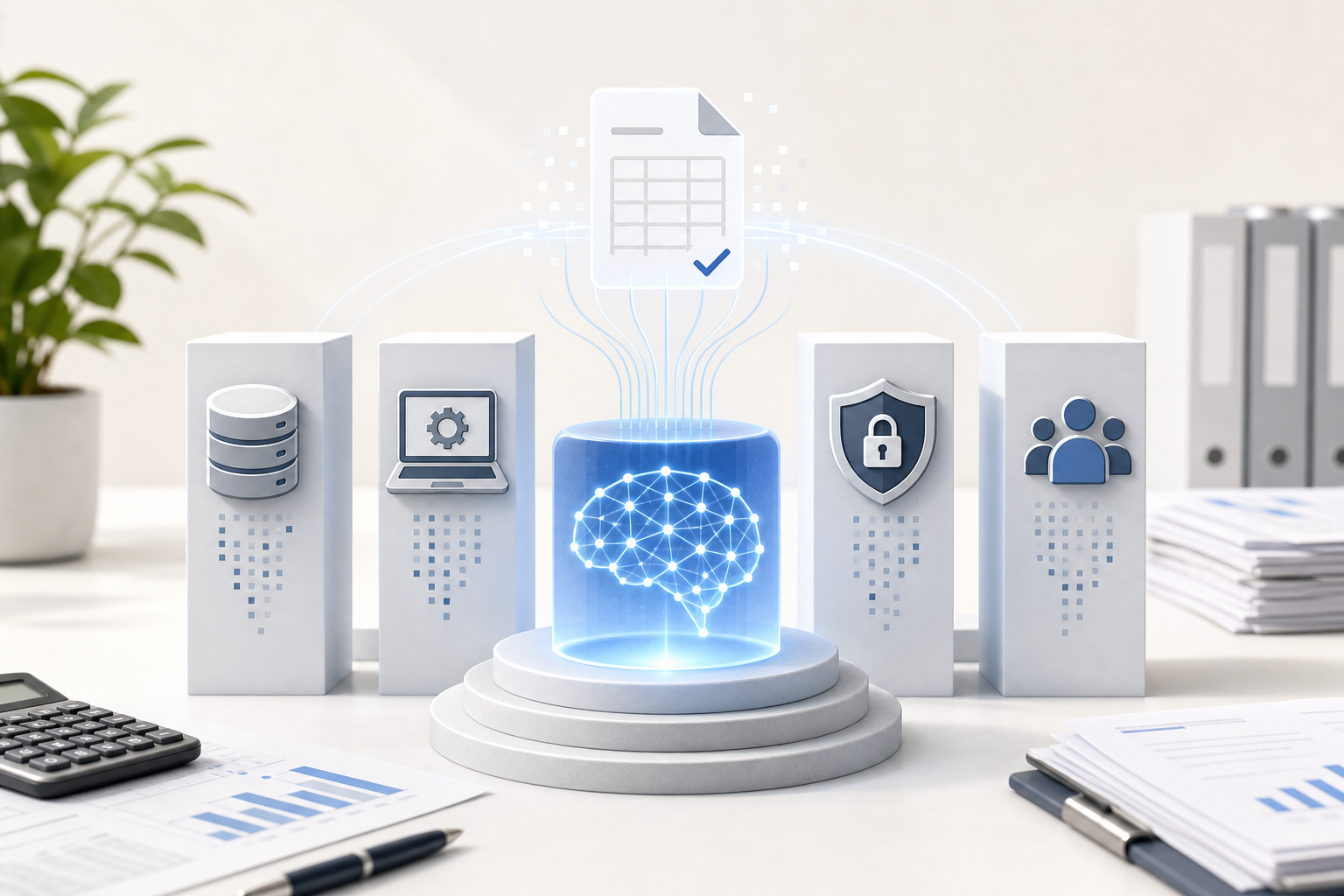
A well-structured assessment covers multiple business dimensions — not just technology. The areas that consistently matter most include:
- Data infrastructure — Is your data clean, accessible, and consistently structured? AI performs poorly on messy or siloed data.
- Process maturity — Are your core workflows documented and repeatable? AI augments defined processes; it rarely fixes undefined ones.
- Team capability — Do your people have the skills and confidence to work alongside AI tools?
- Governance and oversight — Do you have policies for how AI decisions are reviewed, corrected, and audited?
- Leadership alignment — Is there genuine buy-in at the top, or is AI being pushed upward with no budget or mandate behind it?
- Technology stack — Can your existing tools integrate with AI systems, or would adoption mean rebuilding from scratch?
- Culture and change readiness — Does your organisation adapt well to new ways of working, or does change tend to stall?
- Strategic clarity — Do you know which business problems you actually want AI to solve?
AI Ready Score assesses businesses across eight dimensions like these, using 53 to 61 targeted questions. The output is a personalised report that includes your score, an estimated investment range, a risk profile, and a 90-day roadmap — delivered immediately, without a consultant in the room.
What a Good Score Looks Like
There's no single magic number that signals you're ready. Readiness exists on a spectrum, and what counts as a strong score depends on your ambitions and your starting point.
That said, here's a practical way to think about the ranges.
Low Scores (Foundational Stage)
A low score doesn't mean AI is off the table. It means the foundations aren't yet in place. Businesses here typically have fragmented data, undocumented processes, limited digital literacy across the team, and no clear use case in mind.
The risk isn't that you can't adopt AI. The risk is that you adopt it too fast, on the wrong problem, without the infrastructure to support it — which leads to wasted investment and frustrated teams.
At this stage, the priority isn't AI tools. It's data hygiene, process documentation, and building internal capability.
Mid-Range Scores (Developing Stage)
Mid-range scores are the most common for small and medium businesses right now. You have some digital infrastructure, your team is comfortable with software, and leadership is at least open to AI. But there are gaps.
Maybe your data is clean in some areas and chaotic in others. Maybe you've identified a use case but haven't secured budget. Maybe your governance policies are informal — or nonexistent.
Businesses at this stage are close. The improvements that move the needle are often targeted and achievable within a quarter. A 90-day roadmap built around your specific gaps is genuinely actionable here.
High Scores (Optimisation Stage)
A high score means your business has the structure, culture, and capability to adopt AI with a reasonable chance of success. Data is accessible and well-maintained, processes are documented, leadership is aligned, and your team has the skills to work with new tools.
This doesn't mean you're done. It means you're ready to move from readiness to execution — selecting the right tools, running controlled pilots, measuring outcomes, and scaling what works.
The Dimensions That Drag Scores Down Most
Across most SMBs, a handful of dimensions consistently produce the lowest scores. These are worth understanding even before you take a formal assessment.
Data quality and accessibility is the most common drag. Many businesses have data spread across spreadsheets, disconnected platforms, and informal records. Before AI can add value, that data needs to be consolidated and structured.
Governance is frequently underdeveloped. Small businesses often skip formal AI policies because they feel like an enterprise concern. But even basic guidelines — how AI outputs are reviewed, who's accountable for AI-assisted decisions, how errors get caught — make a real difference to both risk and outcomes.
Strategic clarity is consistently underestimated. Many businesses want AI but can't articulate the specific problem they want it to solve. Without a clear use case, adoption becomes expensive experimentation rather than targeted investment.
How to Move the Needle
Improving your AI readiness score isn't about buying more software. It's about addressing the specific gaps your assessment identifies. These are the moves that tend to have the most impact.
Start with one data problem, not all of them
Trying to clean all your data at once is a project that never finishes. Instead, identify the single data source most relevant to your target AI use case and make that clean and accessible first. Progress on one front builds momentum and proves the model internally.
Document three core processes before you automate any of them
AI works best when it's augmenting a defined process. Pick three workflows that are high-frequency and currently inconsistent. Write them down. Standardise the steps. Then — and only then — evaluate whether AI can improve them.
Assign an internal AI owner
Someone in your business needs to own AI readiness. Not a committee. One person who's accountable for tracking progress, evaluating tools, and reporting to leadership. This doesn't need to be a technical hire — it needs to be someone with credibility and curiosity.
Build a basic governance policy before you need one
A one-page policy covering how AI outputs are reviewed, who can approve AI-assisted decisions, and how errors are reported is enough to start. It signals maturity, reduces risk, and makes future audits considerably simpler.
Set a 90-day target, not a 12-month strategy
Long-term AI roadmaps tend to lose momentum. A 90-day improvement plan with three to five specific actions is far more likely to produce visible progress. When you can show internal stakeholders a concrete change in your readiness posture within a quarter, the case for continued investment becomes much easier to make.
Using Your Score as a Business Tool, Not Just a Benchmark
One of the most practical uses of an AI readiness score isn't internal — it's external.
If you're approaching a technology vendor, applying for a grant, or making a case to a board or investors for AI investment, a formal readiness assessment gives you credible, structured evidence. It shows you've done the diagnostic work. It demonstrates that your investment ask is grounded in a real gap analysis, not just enthusiasm.
It also makes conversations with consultants or implementation partners more productive, because you arrive with a clear picture of where you are rather than starting from scratch.
Getting Your Score
If you haven't formally assessed your readiness yet, the fastest way to get a clear picture is a structured assessment that covers all the relevant dimensions. AI Ready Score walks you through 53 to 61 questions across eight business areas and immediately delivers a personalised report — your score, estimated investment range, risk profile, and a 90-day improvement roadmap.
It's built specifically for small and medium businesses that need real clarity without the cost of a consulting engagement.
Frequently Asked Questions
What is a good AI readiness score for a small business?
There's no universal threshold, but a score that reflects strong data infrastructure, documented processes, and leadership alignment puts you in a solid position to adopt AI successfully. The more useful question isn't whether your score is good in absolute terms — it's whether the gaps it identifies are addressable within your current resources and timeframe.
How long does it take to improve an AI readiness score?
Meaningful improvement is achievable within 90 days for most small and medium businesses, particularly in areas like process documentation, governance policy, and internal ownership. Data infrastructure improvements can take longer, but they don't need to be complete before you start making progress elsewhere.
Do I need a technical background to understand my AI readiness score?
No. A well-designed assessment translates technical and operational gaps into plain language. The goal is to give business owners and managers a clear picture of where they stand — not to produce a report that only a CTO can interpret.
What happens if my score is low?
A low score is useful information, not a verdict. It tells you which foundations need attention before AI investment makes sense. Acting on that early saves you from adopting tools that won't perform because the supporting conditions aren't in place.
How often should I reassess my AI readiness?
Every six to twelve months is a reasonable cadence for most SMBs. If you've made significant changes to your data infrastructure, team capability, or technology stack, an earlier reassessment makes sense to see whether those changes have actually shifted your readiness posture.
Can an AI readiness score help me justify AI investment to stakeholders?
Yes. A formal score gives you structured, evidence-based documentation of your current state and the gaps you're addressing. That's considerably more persuasive than a general case for AI adoption — particularly when you're asking for budget or board approval.
Is an AI readiness score relevant if I've already started using AI tools?
Absolutely. Many businesses adopt individual AI tools without ever assessing their broader readiness. A score can surface gaps in governance, data quality, or process maturity that are creating risk or limiting the value you're already getting from tools you're already using.
Knowing your AI readiness score is the starting point, not the finish line. The businesses that get the most from AI aren't necessarily the ones that moved fastest — they're the ones that moved with the clearest picture of where they were starting from. Take the assessment at aireadyscore.com, understand your gaps, and focus your next 90 days on the changes that will actually move the needle.



0 Comments