
- Why Ecommerce Businesses Struggle with AI Adoption
- The Eight Dimensions of AI Readiness for Ecommerce
- Common AI Use Cases in Ecommerce (and What They Actually Require)
- How to Actually Assess Your Readiness
- Sequencing Your AI Adoption
- FAQs
- Where to Start
You've seen what AI can do for ecommerce. Personalised product recommendations. Automated customer service. Dynamic pricing. Demand forecasting that actually works. The tools exist, the case studies are convincing, and your competitors are starting to move.
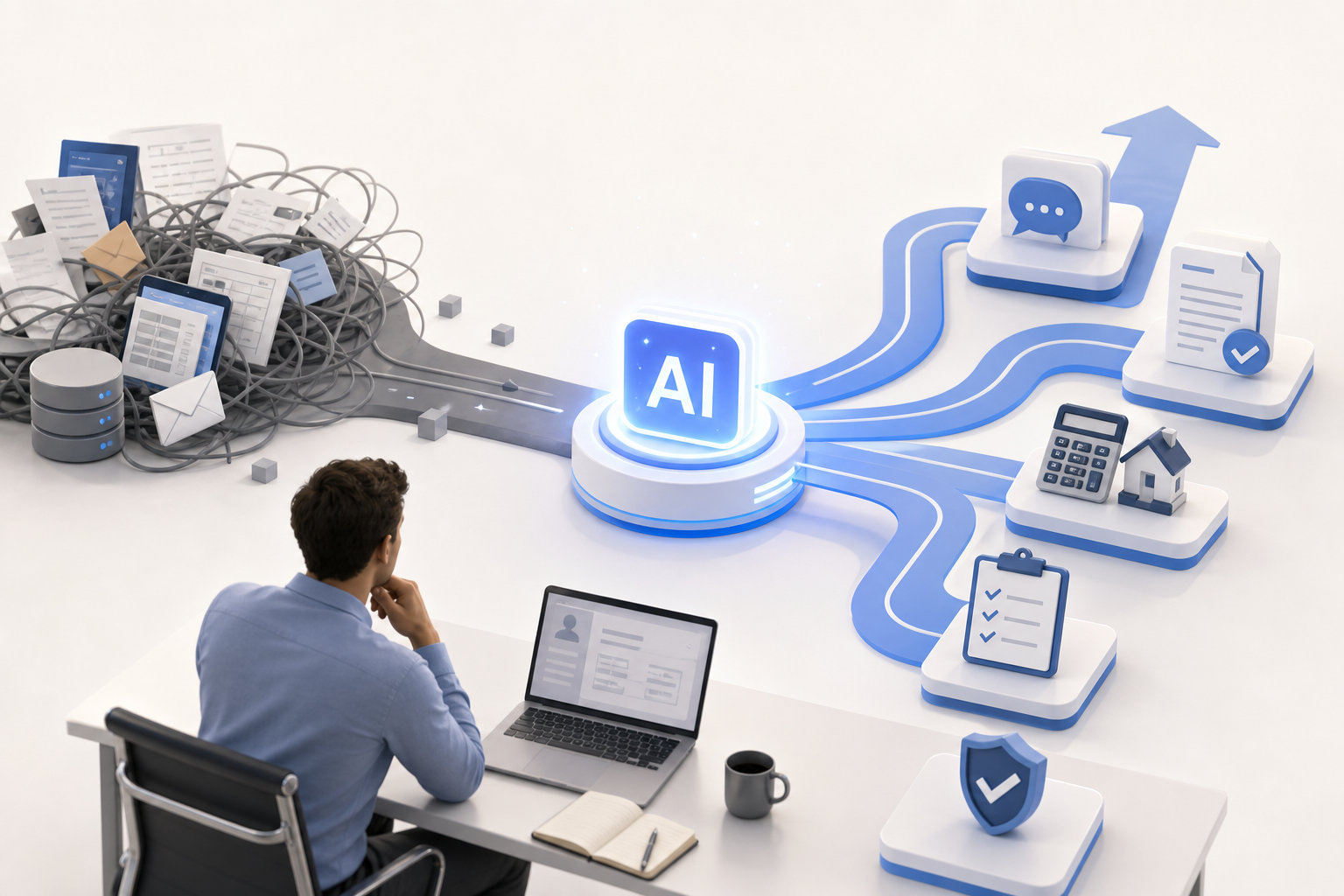
But here's what most "AI for ecommerce" articles skip: the tools are only as useful as the business running them. Plugging an AI tool into a store with messy product data, no clear ownership, and a team that doesn't trust the outputs is a reliable way to waste money and create new problems.
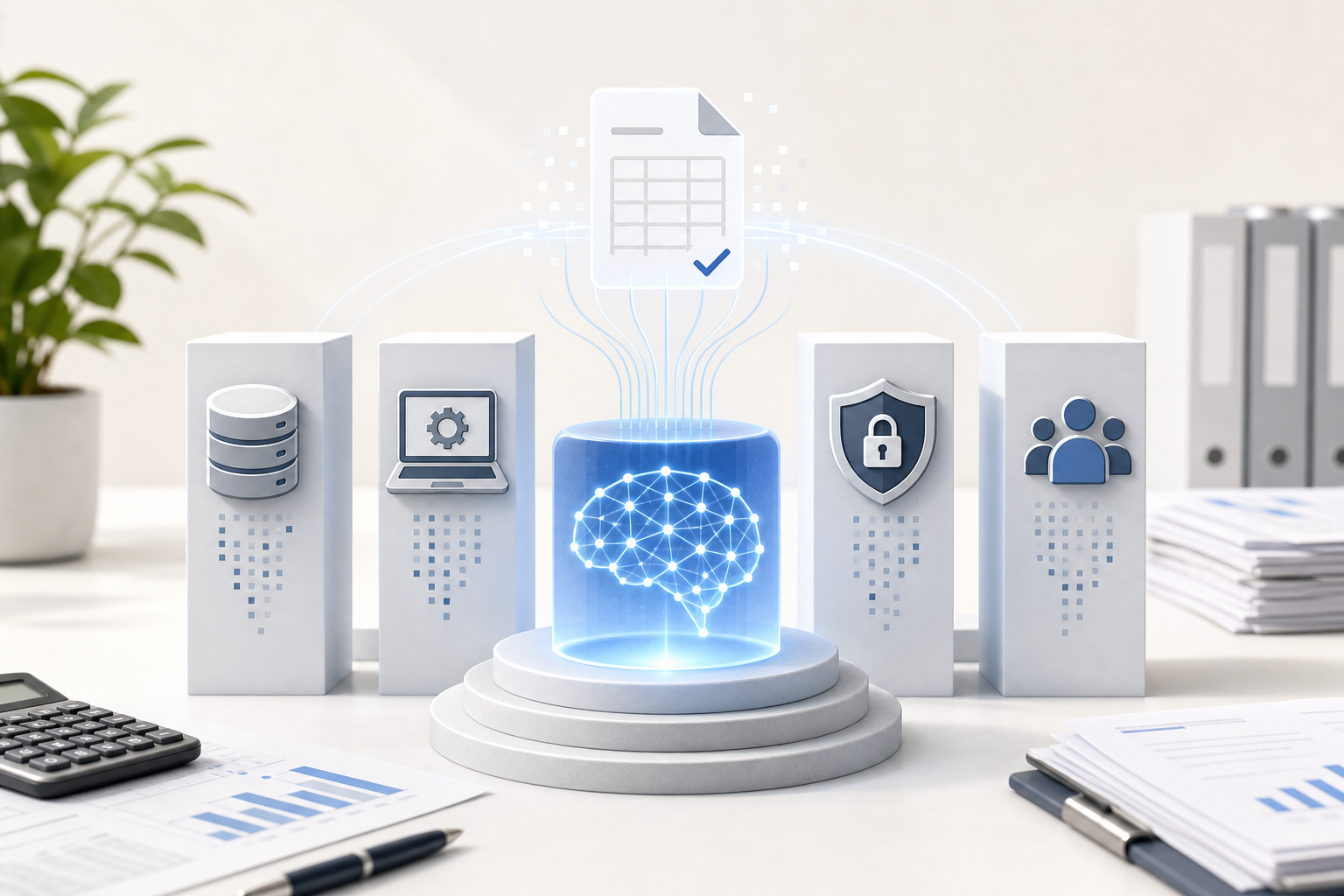
This is a readiness check. Before you commit budget to AI tools for your ecommerce business, it walks through the eight dimensions that determine whether those tools will actually deliver — or quietly underperform.
Why Ecommerce Businesses Struggle with AI Adoption
On paper, ecommerce is one of the most AI-friendly industries around. Transaction data, customer behaviour, product catalogues, clear conversion metrics — the feedback loops are fast and the use cases are well-documented.
In practice, most small and mid-sized ecommerce operators hit the same wall. They implement a tool, see inconsistent results, and conclude that "AI isn't ready for businesses like mine." Often the problem isn't the tool. It's that the business wasn't ready for the tool.
The gap between "AI looks useful" and "AI is actually working in our store" comes down to readiness across several dimensions that have nothing to do with which platform you choose.
The Eight Dimensions of AI Readiness for Ecommerce
1. Digital Foundation
This is your baseline infrastructure — your store platform, integrations, and the systems around it: ERP or inventory management, email platform, CRM if you have one.
AI tools need clean data pipelines. If your product catalogue lives in three places with different naming conventions, a recommendation engine will surface irrelevant results. If order data doesn't flow cleanly between your store and your fulfilment system, demand forecasting models will work from incomplete inputs.
The honest question here: do your core systems talk to each other reliably, or are you manually exporting and importing data between them?
2. Data Infrastructure
This is the most important dimension for ecommerce AI, and the one most businesses underestimate.
Personalisation, forecasting, and pricing tools all depend on historical data that is clean, labelled, and accessible. Three years of transaction data in Shopify or WooCommerce is a strong starting point — but if that data has gaps, duplicate customer records, or inconsistent product categorisation, any AI model trained on it will inherit those problems.
Key questions: How many months of clean transaction data do you have? Are your customer records deduplicated? Is your product taxonomy consistent across your catalogue?
3. Strategy and Leadership Alignment
AI adoption fails when it becomes a technology project rather than a business decision. For ecommerce, that means having a clear answer to: what problem are we actually trying to solve?
"We want to use AI" is not a strategy. "We want to reduce cart abandonment by improving product recommendations for returning customers" is. The second version tells you what data you need, what success looks like, and how to evaluate whether a tool is working.
Without leadership alignment on one or two specific use cases to pursue first, you'll likely end up with a collection of disconnected tools that nobody owns.
4. Governance and Compliance
This one surprises most ecommerce operators. Governance sounds like an enterprise concern, but it matters at SME scale too.
If you're using AI to personalise content, make pricing decisions, or segment customers, you're making automated decisions that affect real people. That creates obligations under privacy law and, increasingly, under AI-specific regulation. The EU AI Act has provisions that apply to businesses using certain automated decision-making systems regardless of company size.
Governance readiness means having basic policies in place: who can approve a new AI tool, how customer data is used in AI models, and what happens when an AI output is wrong or causes harm.
5. Team Culture and Change Readiness
A recommendation engine only works if your merchandising team trusts it enough to act on it. An AI-generated email subject line only improves conversion if your marketing team is willing to test it against their own instincts.
Team readiness is about whether your people will work alongside AI outputs rather than around them. That includes a basic understanding of what AI can and can't do, a process for reviewing AI suggestions, and leadership that models the behaviour rather than just mandating it.
Shadow AI is a real risk here. Without sanctioned tools and clear guidance, staff will use unsanctioned ones — often with no visibility to the business on what data is being fed into them.
6. Process and Workflow Integration
The best AI tools for ecommerce are embedded in existing workflows, not bolted on as separate tasks. A tool that requires someone to log in separately, export a report, and manually apply the output will be abandoned within weeks.
Think about where AI needs to sit in your actual day-to-day operations. If you're evaluating a customer service tool, does it integrate with the ticketing system your team already uses? If you're looking at demand forecasting, does it output directly into the format your buying team works from?
7. Financial Readiness and Investment Planning
Ecommerce operators often underestimate the total cost of AI adoption. The tool subscription is usually the smallest line item. Integration work, data cleaning, staff training, and the time cost of managing change all add up.
That doesn't mean AI is unaffordable for SMEs. It means you need a realistic picture of what closing your readiness gaps will actually cost before you commit to a tool. Even a rough investment range estimate helps you prioritise which gaps to close first and sequence adoption over a realistic timeline.
8. AI Absence Risk
This is the dimension most businesses don't think about until it's too late. What is the cost of not adopting AI while your competitors do?
For ecommerce, the compounding effects are significant. A competitor using AI-driven personalisation will improve conversion rates over time. One using demand forecasting will carry less dead stock and price more competitively. The gap between AI-enabled and non-AI-enabled operators is likely to widen through 2026 and beyond.
AI absence risk doesn't mean you should rush into tools you're not ready for. It means the cost of waiting needs to be weighed alongside the cost of moving too fast.
Common AI Use Cases in Ecommerce (and What They Actually Require)
Before evaluating specific tools, it helps to map use cases to their readiness requirements.
Product recommendations: Requires clean transaction history, a consistent product taxonomy, and integration with your store front-end. Minimum viable data: 6 to 12 months of purchase data with reliable customer identifiers.
Customer service automation: Requires a well-structured knowledge base, clear escalation rules, and team agreement on what the AI handles autonomously versus what needs a human. Governance policy for automated responses matters here.
Demand forecasting: Requires clean historical sales data — ideally with seasonal markers — and integration with your inventory or buying workflow. Works best when your product catalogue is stable enough for patterns to be meaningful.
Dynamic pricing: High governance requirements. Automated pricing decisions can create customer trust issues and, in some markets, regulatory exposure. Needs clear rules, human review triggers, and a policy on how pricing decisions are documented.
Email and content personalisation: Lower data requirements than recommendations, but still needs reliable customer segmentation and a team willing to test and iterate on AI-generated outputs.
How to Actually Assess Your Readiness
Reading a checklist and honestly evaluating your business against it are different things. Most owner-operators have reasonable intuition about their digital foundation and data quality, but tend to underestimate governance gaps and overestimate team readiness.
A structured assessment across all eight dimensions gives you a baseline you can act on. AI Ready Score is a free tool built specifically for this. It covers 53 to 61 questions across the same dimensions described above, and on completion emails you a personalised report with an AI readiness score, an estimated investment range to close your gaps over 12 to 24 months, a three-part risk profile, and a 90-day improvement roadmap prioritised by your weakest dimension.
It's built for SMEs — not adapted from an enterprise framework — and the governance scoring is referenced against real regulatory frameworks including the EU AI Act. The whole assessment takes around 20 to 30 minutes and requires no app or account setup.
Sequencing Your AI Adoption
Once you have a clear readiness picture, the question becomes: what do you fix first?
A useful sequencing principle for ecommerce: start with the dimension that blocks the most use cases. For most small ecommerce businesses, that's data infrastructure. Clean, accessible transaction data is the prerequisite for almost every AI use case worth pursuing.
After data, governance and process integration are typically the next bottlenecks — not because they're technically complex, but because they require decisions and alignment that take time.
Tools come last in this sequence, not first. Choosing the right AI tool for your ecommerce business is much easier once you know your data is clean, your team is aligned, and your governance basics are in place.
FAQs
What AI tools are most useful for small ecommerce businesses?
The most useful tools depend on your specific gaps and goals. Product recommendation engines, AI-driven email personalisation, and customer service automation are common starting points for SMEs because they have relatively accessible data requirements and measurable outcomes. The right choice depends on your existing data quality, team capacity, and which problem you're trying to solve first.
How much data do I need before AI tools will work for my ecommerce store?
It varies by use case. Product recommendations generally need at least 6 to 12 months of clean transaction data with reliable customer identifiers. Demand forecasting benefits from longer history, especially if your business has seasonal patterns. Content personalisation can work with less historical data but still requires reliable customer segmentation.
Is my ecommerce business too small to benefit from AI?
Size is less of a barrier than data quality and process maturity. A business with 5 staff and clean, well-structured data will get more from AI tools than a 50-person operation with fragmented systems and no governance in place. The question isn't whether you're big enough — it's whether your foundation is ready.
What does AI governance mean for an ecommerce business?
At a practical level, it means having clear policies on how AI tools are approved and used, how customer data feeds into AI models, and what happens when an AI output is wrong. For operators using automated pricing or personalisation, it also means understanding your obligations under privacy law and emerging AI regulation.
How do I know if my team is ready for AI adoption?
Team readiness comes down to two things: whether your people understand enough about AI to use it sensibly, and whether they're willing to work with AI outputs rather than ignore them. Signs of low readiness include staff using unsanctioned AI tools without management visibility, or leadership mandating AI adoption without providing training or clear guidelines.
How long does it take to close AI readiness gaps in an ecommerce business?
It depends on the gaps. Data infrastructure improvements can take weeks to months depending on how fragmented your current systems are. Governance policy development is often faster — a few weeks with the right focus. A realistic timeline for closing the most common SME readiness gaps is 12 to 24 months, which is why phased roadmaps are more useful than trying to fix everything at once.
What's the difference between an AI readiness assessment and just trying an AI tool?
Trying a tool tells you whether that specific tool works in your current setup. An AI readiness assessment tells you why it worked or didn't, and what you'd need to change to get better results from any AI tool. Assessments also surface risks you might not see until they become problems — including governance gaps and team culture issues that affect adoption regardless of which tool you choose.
Where to Start
Ecommerce is a strong environment for AI adoption. The data is there, the use cases are proven, and the competitive pressure is real. But the businesses that get the most from AI tools in 2026 will be the ones that assessed their readiness honestly before committing to a platform.
Take stock of your data quality, your governance basics, and your team's actual readiness before you start evaluating tools. A structured readiness check will save you more time and money than any individual tool selection decision. Start at aireadyscore.com if you want a scored baseline and a prioritised roadmap to work from.


0 Comments