- What AI Readiness Actually Means
- Why It Is a Clarity Problem, Not a Technology Problem
- The 8 Dimensions of AI Readiness
- What a Useful AI Readiness Assessment Produces
- What AI Readiness Is Not
- How to Get Your AI Readiness Score
- A Note for Accountants and Business Advisors
- Frequently Asked Questions
Only 11.9 percent of small and medium businesses actively use AI. Among large enterprises, that number is 40 percent. That gap is not mainly about budget or technical skill. It is mostly about clarity.
Most SME owners know AI matters. They have seen the headlines, heard it from a competitor, or fielded a question from their board. What they lack is a structured way to assess where they actually stand. That is what AI readiness is for.
This guide explains what AI readiness means in plain terms, why it matters for businesses your size, and what a genuine assessment looks like in 2026.
What AI Readiness Actually Means
AI readiness is a measure of how prepared your business is to adopt, implement, and benefit from artificial intelligence tools and processes.
It is not a binary. You are not simply "ready" or "not ready." It is a spectrum, and where you sit on that spectrum depends on factors across your entire business — not just your technology stack.
A business with strong cloud infrastructure but no data governance policy is not ready to deploy AI safely. A business with great data but no internal AI strategy will struggle to get consistent results. A business with neither — that also faces EU AI Act compliance obligations — is carrying three distinct types of risk at once.
AI readiness accounts for all of that.
Why It Is a Clarity Problem, Not a Technology Problem
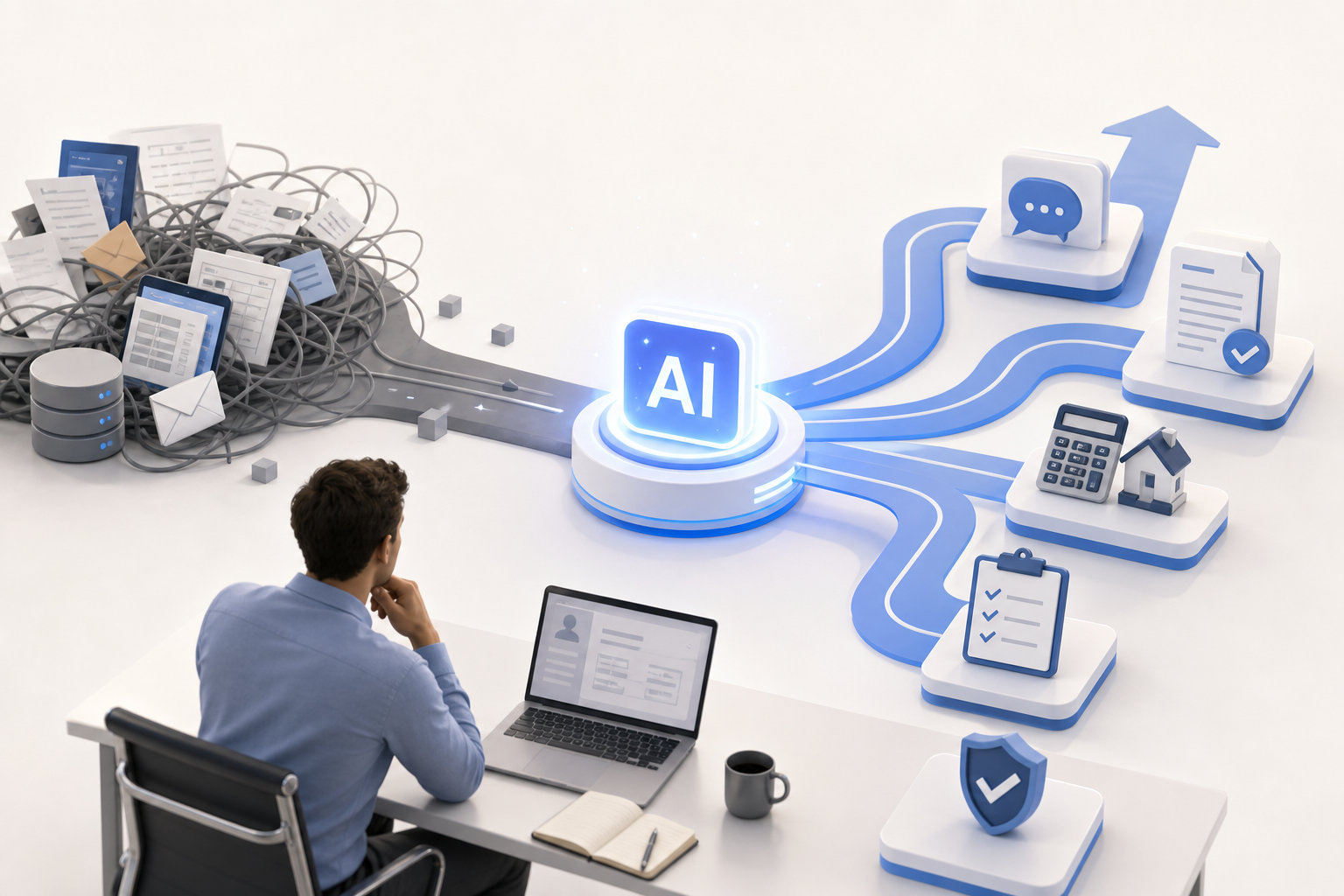
The most common mistake SME owners make is treating AI adoption as a technology decision. It is not. It is an organisational decision that happens to involve technology.
The questions that actually determine your readiness look like this:
- Do you have clean, accessible data your team can work with?
- Does your leadership have an agreed position on how AI will be used?
- Do your staff understand what AI is expected to do — and what it is not?
- Are your current tools integrated well enough to support automation?
- Do you have any governance policies covering AI use, data privacy, or model outputs?
None of those are purely technical questions. They span strategy, culture, data management, and compliance. That is why a 10-question quiz cannot give you a useful answer — and why a $15,000 consulting engagement is out of reach for most businesses your size.
The 8 Dimensions of AI Readiness
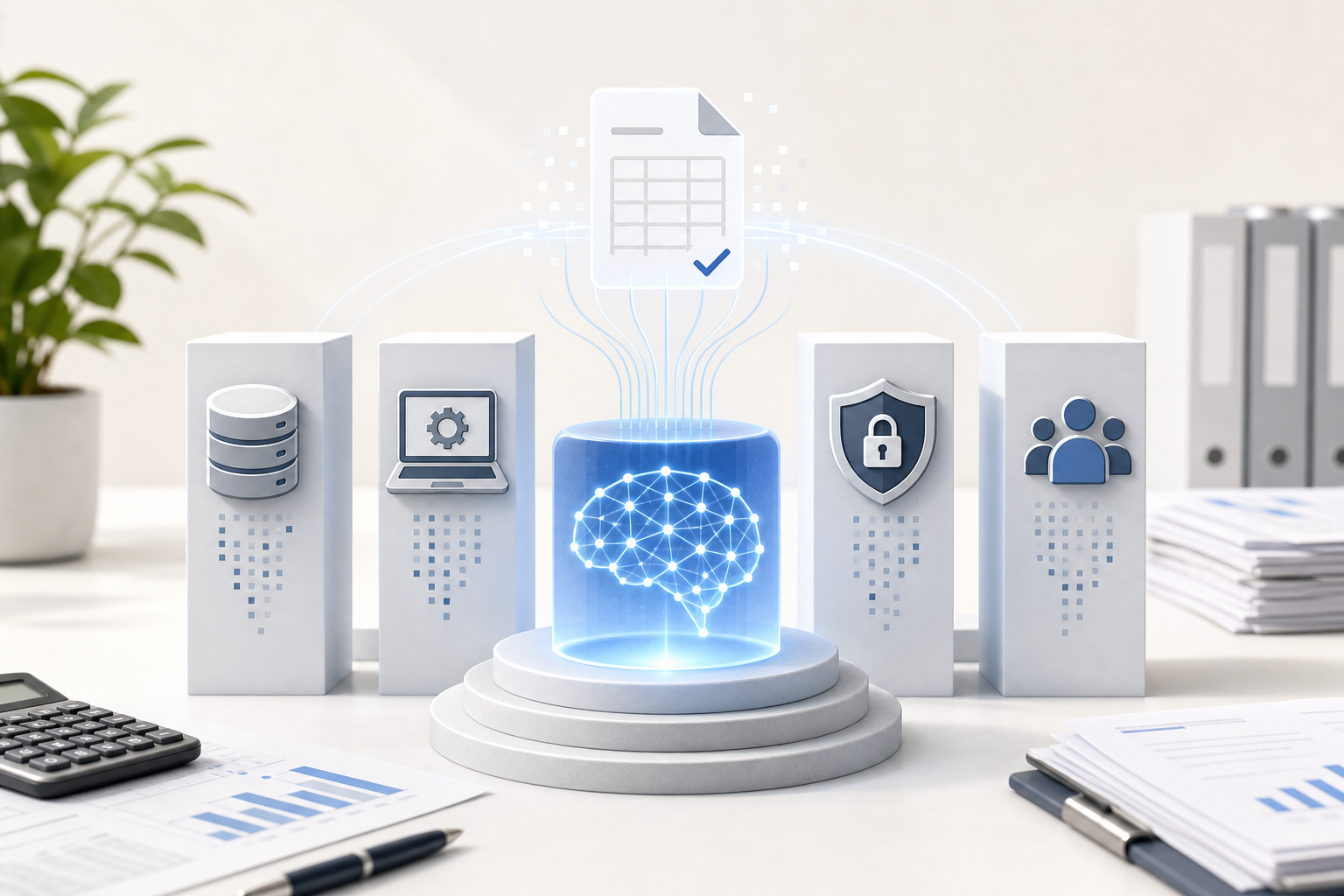
A rigorous AI readiness assessment covers multiple dimensions of your business at once. The most complete frameworks examine at least these eight areas:
1. Digital Foundation
What tools and platforms does your business currently run on? Are they cloud-based, integrated, and reasonably current? Businesses still running disconnected legacy systems face a harder path to AI adoption than those already using tools like Xero, HubSpot, or Slack.
2. Data Infrastructure
AI runs on data. If yours is siloed, inconsistent, or poorly documented, any AI tool you implement will produce unreliable outputs. This dimension looks at how your data is stored, structured, and accessed.
3. Data Governance
Having data is not enough. You need policies around how it is collected, who can access it, how long it is retained, and how it is protected. Weak governance creates both operational and legal risk.
4. AI Strategy
Does your business have a defined position on AI? A strategy does not need to be a 40-page document. It needs to answer three things: what problems are you trying to solve, what tools will you use, and who is responsible for outcomes?
5. Team Culture
AI adoption fails most often not because of technology but because of people. This dimension looks at whether your team understands AI's role, whether there is resistance or enthusiasm, and whether leadership is modelling the right behaviours.
6. Governance and Compliance
This is the dimension most SME tools ignore entirely. With the EU AI Act now in effect and carrying penalties of up to €35 million for non-compliance, governance is no longer optional for businesses operating in or selling to European markets. This dimension scores your policies, accountability structures, and awareness of your regulatory obligations.
7. Operational Processes
Which of your current processes are candidates for AI-assisted improvement? Are they documented and consistent enough to automate or augment? Businesses with ad hoc, undocumented workflows get less value from AI tools — and take longer to realise it.
8. Investment and Change Readiness
Can your business absorb the cost and disruption of AI implementation? This includes financial capacity, leadership bandwidth, and the organisational appetite for change across a 12 to 24 month horizon.
What a Useful AI Readiness Assessment Produces
Knowing your score is only part of the value. A well-designed assessment should give you four things:
A readiness score that reflects where you sit across all 8 dimensions — not just an average that flattens the detail.
An estimated investment range to close your readiness gaps over a realistic timeframe. Without this, a score is just a number with nowhere to go.
A risk profile that breaks your exposure into distinct categories. The most useful frameworks separate AI-Absence Risk (the cost of not adopting), Implementation Risk (the likelihood your adoption will fail), and Governance Risk (your exposure to regulatory and reputational harm).
A 90-day roadmap that prioritises actions based on your weakest dimension. Not a generic checklist — a sequenced plan built from your specific answers.
If an assessment does not produce all four of these outputs, it is giving you awareness without direction.
What AI Readiness Is Not
A few things worth being direct about.
An AI readiness assessment cannot tell you which specific tool to buy. That depends on your budget, your existing stack, and your use case — and it requires more context than any assessment can capture on its own.
It cannot guarantee implementation success. Readiness is a starting point. Execution still requires decisions, resources, and follow-through.
It is not a substitute for legal advice on compliance. If your business has specific EU AI Act obligations, a readiness assessment can flag the gaps — but you should work with a qualified advisor to address them.
What a good assessment does is give you a structured, honest picture of where you stand so you can make better decisions. That is its job, and it does that job well.
How to Get Your AI Readiness Score
AI Ready Score is a free, web-based assessment built specifically for SMEs. You answer 53 to 61 questions across all 8 dimensions described above. When you finish, the tool immediately emails you a personalised AI-generated report — not a template, but a report generated directly from your answers.
It includes your readiness score, an estimated investment range, a three-part risk profile covering AI-Absence Risk, Implementation Risk, and Governance Risk, and a 90-day improvement roadmap prioritised by your weakest area.
The methodology is backed by the SME Association of Australia, which represents more than 315,000 businesses. There is no consultant required, no app to download, and no cost to complete it.
If you are based in the US, there is a localised version at aireadyscore.com/us.
A Note for Accountants and Business Advisors
If your clients are asking you about AI and you are not sure how to structure that conversation, an AI readiness assessment is a practical place to start. The white-label version of AI Ready Score lets you offer branded assessments to your own clients — giving you a structured conversation starter rather than a blank-page advisory engagement. Contact the team at aireadyscore.com for details.
Frequently Asked Questions
What is AI readiness in simple terms?
AI readiness is a measure of how prepared your business is to adopt and benefit from AI tools. It covers your technology, data, strategy, team culture, and governance — not just whether you have the right software.
Why does AI readiness matter for small businesses?
Most small businesses are significantly behind large enterprises in AI adoption. The gap is not mainly about budget. It is about not having a clear picture of where you stand and what to fix first. AI readiness gives you that picture.
What are the main dimensions of AI readiness?
A thorough assessment covers digital foundation, data infrastructure, data governance, AI strategy, team culture, compliance and governance, operational processes, and investment readiness. Assessments that cover fewer dimensions tend to produce less actionable results.
What is AI-Absence Risk?
AI-Absence Risk is the risk your business carries by not adopting AI while competitors do. It includes losing efficiency, falling behind on customer experience, and ceding market position to more automated competitors.
What does the EU AI Act have to do with AI readiness?
The EU AI Act imposes obligations on businesses that develop or use AI systems affecting people in EU markets. Governance scoring tied to the EU AI Act helps businesses identify compliance gaps before they become penalties. Non-compliance can carry fines of up to €35 million.
How long does an AI readiness assessment take?
A thorough assessment covering 8 dimensions typically takes 10 to 15 minutes to complete. Shorter assessments take less time but also produce less specific results.
Is there a free AI readiness assessment for small businesses?
Yes. AI Ready Score at aireadyscore.com is free for SME owners and produces a personalised AI-generated report covering all four key outputs: readiness score, investment estimate, risk profile, and 90-day roadmap.
AI readiness is not a destination. It is a starting point. The businesses that act on a clear picture of where they stand will be better positioned than those still waiting for certainty. Start with an honest assessment of where you are today.


0 Comments